
PrimeGenesis Blog

Mergers and Acquisitions Are Not Strategies. They Are Tactics.
The critical point is to leverage mergers and acquisitions as tools to accelerate strategic shifts, not as answers on their own.

How TriZetto’s CEO Changed Its Culture By Changing Its Attitude
Changing an organization’s culture is hard. But as Peter Drucker famously said, “Culture eats strategy for breakfast.” A counter-cultural strategy will fail every time. It may look like your new strategy is gaining traction early on, but sooner or later culture will always win. This is why a new strategy may require a culture change.
The implementation of healthcare reforms in the U.S. created a massive opportunity for healthcare information technology provider TriZetto. To take advantage of this opportunity, CEO Trace Devanny knew he must change TriZetto’s strategy, posture and culture driving people to “listen, align and act on client input”, moving the organization from product-focused to solution-focused, and from payer-focused to healthcare-focused. This is a good example of leading a cultural transformation with an attitude change.

BRAVE Leadership
BRAVE leadership is not about you as the leader. It’s about inspiring and enabling others. You can earn their devotion to an important cause by focusing on behaviors, relationships, attitudes, values, and the environment and asking and answering five questions

MicroStrategy CEO Michael Saylor on How to Capitalize on the Mobile Wave Before You Get Washed Out
It’s always more fun to be part of the solution than to be part of the problem. When the problem is the inefficiency and ineffectiveness created by decades of ever-expanding bureaucracies, and the solution is the next iteration of the information revolution – the mobile wave – you’re either part of the change or you’re going to get automated out.
This is survival of the fittest and more evidence that we’re all new leaders all the time. The mobile wave is to bureaucrats what the giant meteor was to dinosaurs. The difference is that even the most corporate bureaucrat can see it coming. Where they might have ignored the Internet and its 5 percent penetration, if Microstrategy’s CEO Michael Saylor is anywhere near right that mobile is going to get 50 percent penetration, go mobile or go away.

New Best Buy CEO Must Earn the Right to Lead Before He Can Lead
This is a classic case of converging and evolving with accelerated timing. Best Buy needs strong leadership as soon as possible. Joly has the knowledge and experience to provide that leadership. The trap would be jumping in and trying to lead from day one without converging first. Joly has the mandate and ability to lead quickly. But his mandate will evaporate in a nano-second if he doesn’t convert stakeholders’ hopes for him into confidence.
He joined Carlson to run a division. It did well. As Joly put it, when he became CEO “I was not an unknown to Carlson, as I rose from within the company.” At Best Buy he’s an unknown. People will be watching his every move early on to figure out what changes he will make and how those changes will impact them personally.
There are some basic steps to converging and evolving.
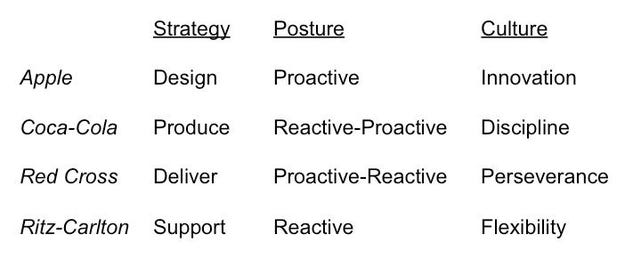
Want to Change the World? Define Your Organization’s Attitude
Successful organizations like Apple, Coca-Cola, the Red Cross and Ritz-Carlton all have a distinct attitude. For example, Apple leads its competitors in designing innovative products. Winning attitudes do not emerge by chance. Leaders aligning their organization’s...

Steelcase CEO on How Office Layout Impacts Corporate Culture
Your office environment is not just the context for what you do, it’s an important choice itself. There is no one best environment for all organizations. Instead, plan and put together your office environment as a core component of the BRAVE culture you choose to create. Create an environment that:
Supports behaviors which lead to business productivity.
Enables people to relate to each other and to information the way you want them to relate.
Reinforces your attitude, more severe and hierarchical or more relaxed and fluid as appropriate.
Lives and breathes your organization’s values.
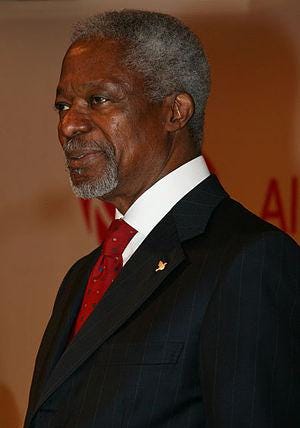
How to Decide When It’s Time to Walk Away a la Kofi Annan in Syria
If one of the world’s most experienced and respected diplomats, former United Nations General Secretary and Nobel Prize winner Kofi Annan can’t resolve differences, what hope is there for the rest of us dealing with our own office politics?
Don’t get me wrong. I’m not suggesting that any organization’s politics are anywhere near as complicated as what’s going on in and around Syria. It’s just that some barriers are insurmountable and knowing when to walk away is a critically important skill.

Learn and Apply The Critical Communication Lesson From NBC’s Olympic Timing Misfires
NBC has had a couple of communication misfires. The one that triggered this article was their running a promotion of their soon to be aired interview with backstroke gold medalist Missy Franklin seven minutes before showing the race in which she won the gold medal. This was a mistake that diminished the viewing experience of the small percentage of the population that did not already know Missy won the gold.
NBC is not alone in failing to control the timing of information flows. Obama wanted to tell people about his vice president pick in 2008 via email. But it leaked. Romney wants to tell people his upcoming vice president pick via an app. But it’s going to leak. That’s what free-flowing information does. It leaks. The Internet and social media accelerate the timing of those leaks and amplify their reach.

Give Your Boss What She Needs, Not Just What She Requests
This worked because Ammann followed three principles which new leaders must also keep in mind when initiating cultural change within organizations:
Delivered what was agreed;
Leveraged special knowledge and insights;
Managed the balance of risk and reward in the direction of goodness.
Change doesn’t happen on its own. Generally, someone has to have the courage to lead the way and do something outside the accepted norms of behavior and decision-making. Have the courage to take similar risks. But manage them in the right way. You won’t go very far wrong by following Ammann’s example of how to bridge the gap from accepted norms to a brighter future.